Built Around the Customer: Pret’s Shop of the Future
Built Around the Customer: Pret’s Shop of the Future
In 2024, eatbigfish partnered with Pret to create a customer-first strategy for its new regional shop formats — developed through a socialized, cross-functional process that aligned teams around a shared vision and brought the concept of the ‘Shop of the Future’ to life. Senior Strategist Tara Henderson caught up with Pret's Senior Operations Consultant Inga Gruodis to find out all about it.

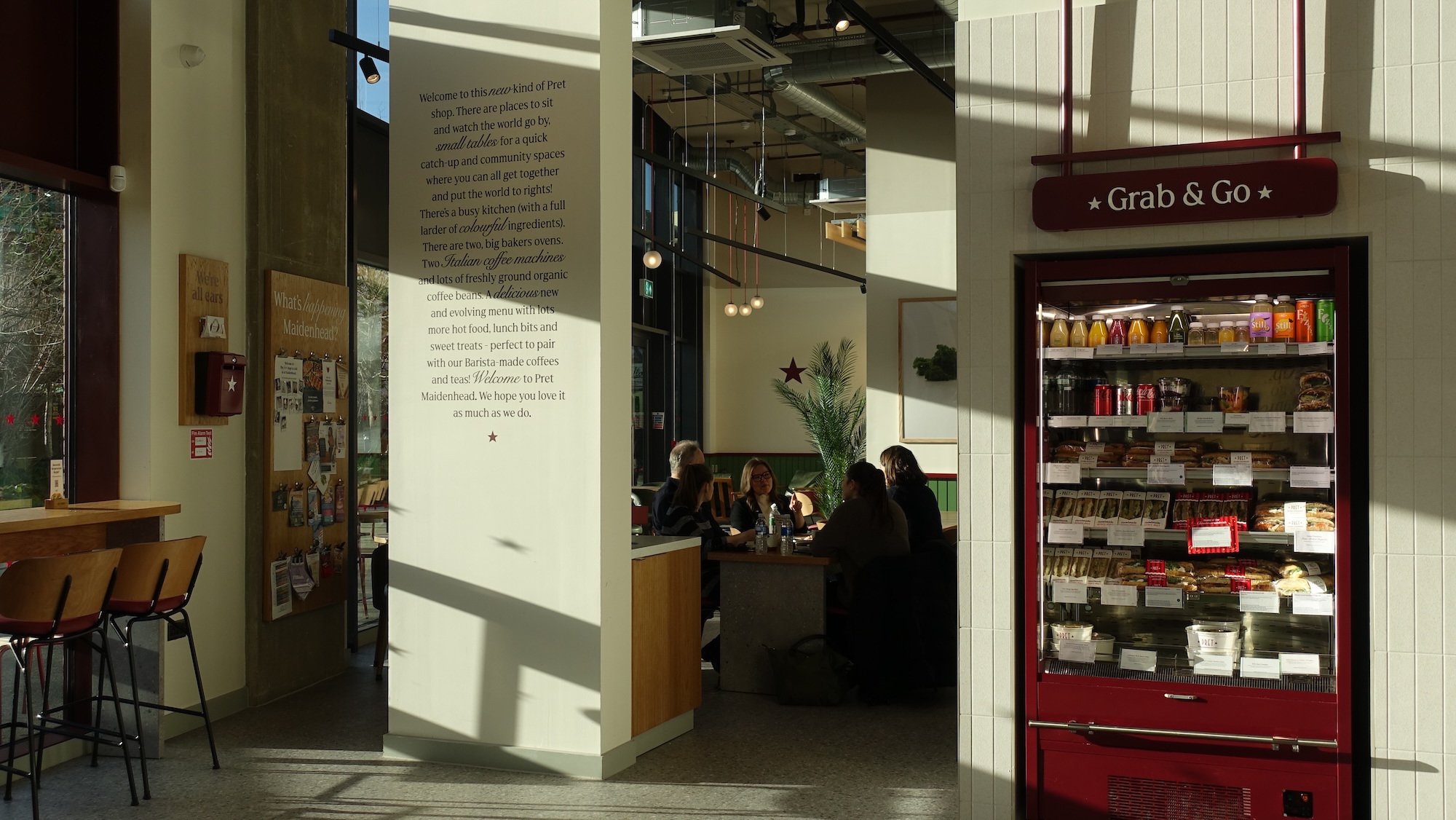
So Inga, tell us what happened after we finished the strategy project with you? How did Pret commit to and embed the new strategy?
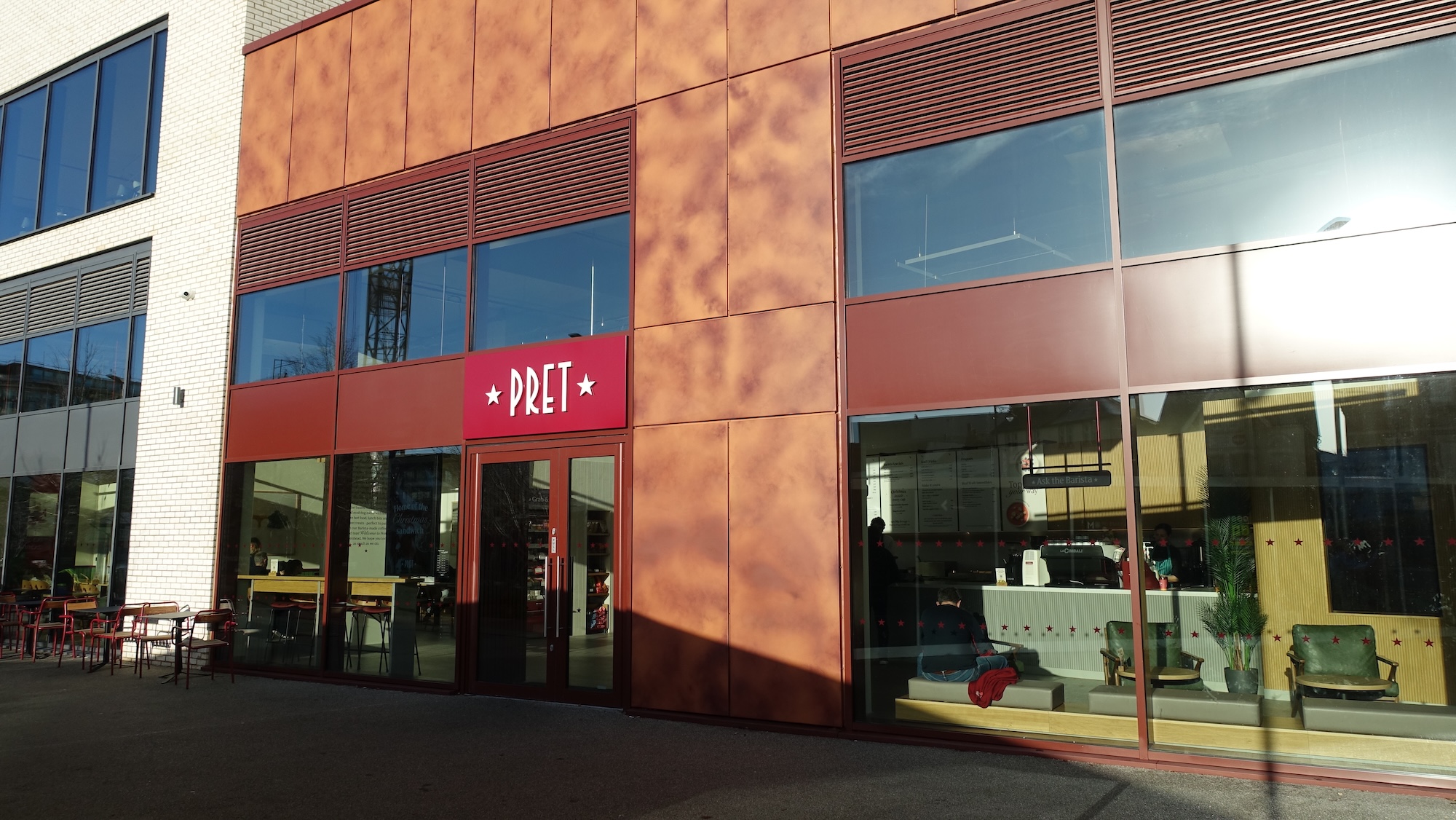
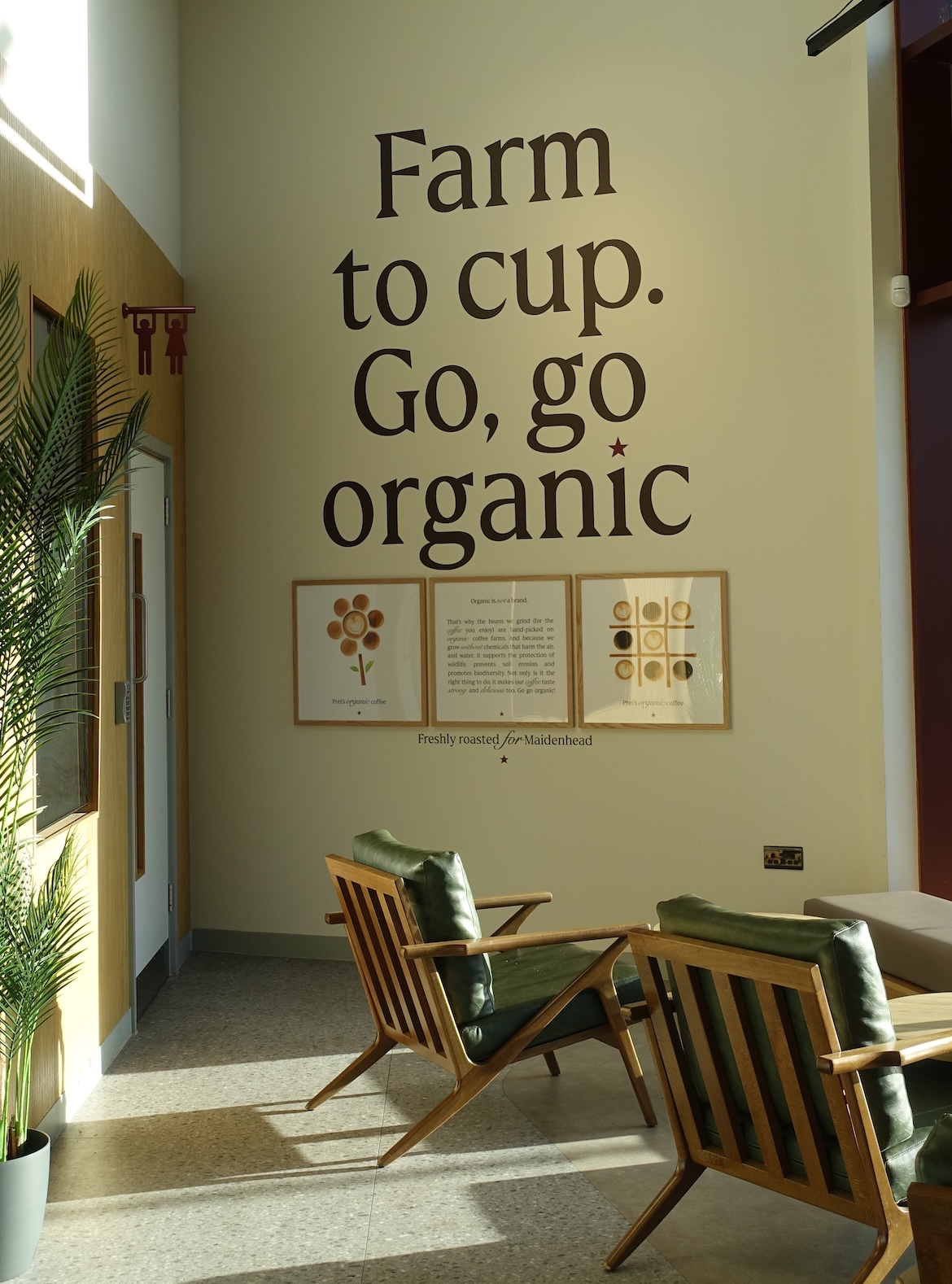
The most tangible outcome is that we translated the strategy into a real concept. The Regional Shop of the Future was born, and two new stores are now open, with customers visiting as we speak.
What eatbigfish really did was open up a way for us to learn more about how we can take this strategy further. For example, the look and feel of the Regional Shop of the Future is now being replicated into the broader look of Pret for the future.
For instance, a shop we have opened in London now includes many design elements from the Regional Shop of the Future. It’s beautiful to see that it’s no longer just a Regional Shop of the Future – the concept is now weaving its way into the whole Pret brand.
It’s not just design either. Some of the new food, like the cake range, has just launched across the whole of Pret. And these cakes are flying! When I see them, it feels like a personal win, because these are the Regional Shop of the Future cakes, now brought to life everywhere because of the strategy we carved out together.
I think we’ll be seeing many more of those elements that came out of the work and the strategy shaping the future of the brand.
Pret has a very ‘test and learn’ type of approach. Can you tell us more about that and how the brand has used this approach in conjuncture with the strategy for the Regional Shop of the Future?
What working with eatbigfish allowed us to do is think differently. Pret has historically been a very strong brand, particularly in operations and in executing our plans. But what we learned from you – and what happened in real life as a result – is that we needed to move from “this is what we're going to do because that's what we think we should do” to completely flipping that upside down and putting the customer experience first.
We became obsessed with what the customer experience will be: who the customer is in those communities, what they will feel, what they will smell, hear and experience, and what they will tell others about when they leave.
Once we had those answers, only then did the design, food, innovation and operational processes follow. What was so beautiful to watch was that the whole process started with the belief that we truly understand what that customer wants and needs. Only after that could all the other pieces come together.
That process allowed us to make decisions much faster, better, and in a far more efficient way.
As you know, ‘Can If’ thinking is one of the key ways eatbigfish challenges clients to think differently. How has this travelled more widely within the business or for you personally?
It shifted us from a “we can’t because…” mindset to a “we can if…” mindset. Still to this day, I carry that flag very proudly. My opening sentence in almost any challenging meeting is, “we can if…”
I also see teams starting new projects where people who were part of the original work are bringing those nuggets from the strategy with them. It’s wonderful to see how that thinking has travelled.
In the original Shop of the Future work, almost every decision was challenged and approached with that “can if” mindset. Today, I’m in a more diverse role, working across equity operations, and consulting the franchise partners. When I work with a wider group of stakeholders – including more senior stakeholders, I often come back to challenging the belief of why something won’t work, or the idea that “we’ve tried this before and it didn’t work.”
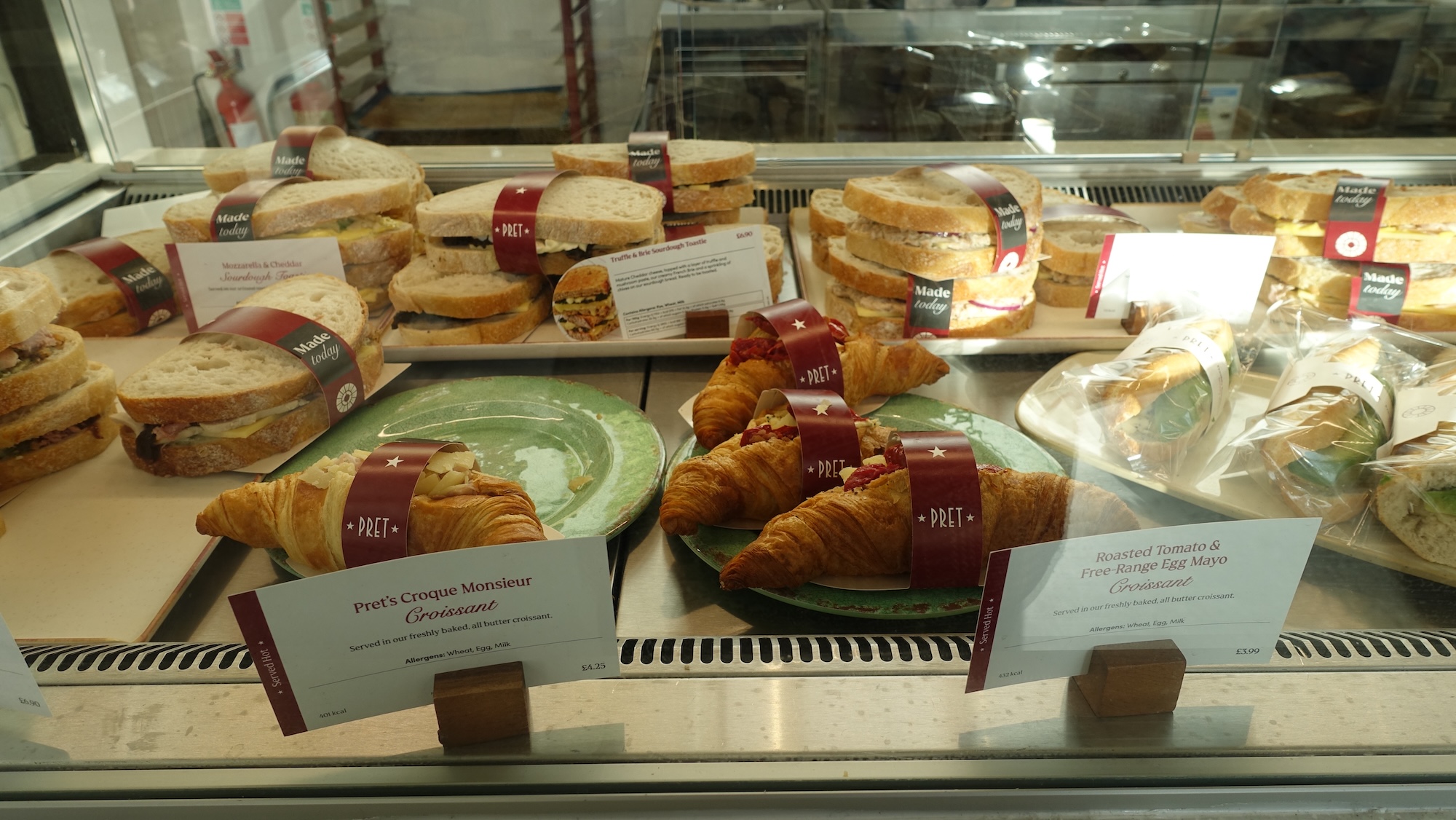
And this applies to everything. It could be something as small as putting a cake on a tray versus putting it on a stand or even deciding whether to have cakes in the Regional Shop of the Future at all. There was some hesitation, because we had tried cakes before in regional stores and it hadn’t particularly worked out. So, when we started advocating for bringing more cakes into the concept, the question was: is it going to sell?
But we learned that it could work if we presented it differently; if we placed it somewhere else in the display; or if a team member talked to customers about this new, beautiful cake.
Personally, I use this strategy almost every day. I use it with my team when they say they can’t do certain things because it’s difficult. My response is: “Okay, I hear you. This is difficult. But how can we do it? What needs to happen for us to make it possible?”
I even use it a little bit at home. And I see how easily colleagues borrow the line as well, because it’s such a powerful way to help people think differently.
How did the more socialized way that eatbigfish work, for example, the in-person workshops, benefit the process with Pret?
Having those workshops in person at the very start was probably the most successful thing about the project. We were a large group, maybe 30 people in the room, if not more. But the way the workshops were structured meant we worked both as a full group and in smaller teams.
At the beginning, we brainstormed together to get to the core of the brand. It worked really well, because the more opinions that were shared, the more bonded we became, and it created a great dynamic. Then, when we needed to narrow down insights and make decisions, we split into smaller groups that would later share back with everyone.
This sharing back felt very tailored because the groups were organised by department or category, so it never felt crowded. And because the whole process was in person, there was 100% commitment. Once someone is physically there with you, they are truly present. You also had ground rules – like no phones in the workshop, and although that sounds simple, it was a game changer. When people are fully present, you get the very best out of them. That was the beauty of it.
I don’t think the work we did after the workshops would have happened as effectively if we hadn’t had those in-person experiences together. For me, it was mind-blowing, even the act of writing things down and putting everything on the wall. What really stuck with me was how powerful it was when, after three days, you stepped back and could see the whole story in front of you.
I’ve used that approach again and again since then, travelling from meeting room to meeting room with cardboard cut-outs and everything. Because the power of that visual storytelling, the handwriting and pictures, is incomparable to any email.
Pret has grown so much over the last several years, and having been here for over 20 years, I remember when we used to do things in a very similar way. My training back then wasn’t with PowerPoints and all those tools. Everything was very visual; writing on flip charts, putting ideas on the walls. So, this process brought us back to that and grounded us in a way that meant everyone was fully present and committed to contributing 100% or more.
There’s so much power in that. I truly believe we wouldn’t have achieved the outcomes we did if the process had been online or remote.
Talk to us about getting to an aligned place with the rest of the project contributors. How did that work for you?
I’ve been at Pret for 22 years, and it was very evident, even in the very first workshop, that when you bring such a wide group of stakeholders into the room everyone arrives with a different agenda. We had people from brand strategy, operations, food design, international consultants and franchisees, and each group brought different beliefs, opinions, experiences and views on what they thought needed to happen.
But the way you created the strategy with us was structured while still leaving plenty of room for creativity. The process gradually guided us away from our individual beliefs and mindsets and aligned us around what the brand is truly about. It brought us back to the core of why Pret is so unbelievably amazing, successful and wonderful, and then added the layer of what needs to happen now to bring Pret as an experience to customers in the areas beyond places where we are already a very successful and growing business.
That shared belief and way of thinking made us much more powerful in our decision-making, because we all saw the same vision. We had a grounding belief about what we wanted Pret to become in those regional towns and how we would show up in very different communities and bring that warmth, engagement and personal touch that is so true to the Pret brand. The thinking really anchored us and glued us together, not around our individual egos, but around one belief that we all agreed was true. I think that was probably the most powerful thing eatbigfish did.
Secondly, it brought back the power of storytelling to the way we work. And storytelling isn’t just something you do for others, it starts with telling the story to yourself. What eatbigfish did was give that a new dimension: how are we going to tell the story to ourselves, to us as a group, to our company audience, and then ultimately to the world? You need that belief to get a strategy off the ground.
That was incredibly helpful for me as the lead on the project. Once that storytelling was in place, my job became much easier in terms of getting the work started and encouraging people to do what was needed – especially because it was challenging work and we were operating in a very constrained environment.
We eventually condensed the project into a deck, and that deck became my passport in a way. In challenging situations, it enabled me to ask the right questions, like: “How does this impact the customer experience?” For example, when we needed an agreement to introduce a new till screen, we didn’t want a big computer sitting between the team member and the customer because wanted interaction between them. So, the screen had to be low.
Once you have that framework, it stops being just a tool. It simply becomes the way you do things. You can bring anyone into the process at any time and quickly onboard them.
As the project lead, I probably value and appreciate it more than anyone, because it allowed me to facilitate the work and move things forward so much more easily. But now I also see it being used repeatedly across the more teams in the organisation.
As we know, strategy development is just the start, and it actually takes a long time to implement. How did the eatbigfish process help Pret to work more efficiently, and was it easier to get things off the ground?
Because we were more aligned after the process and had a very clear set of principles we had all agreed on, we knew exactly what we wanted to double down on. So, whenever debate came up and trust me, there was a lot of debate, and maybe even a little arguing in the room – we always knew what to come back to in order to move things forward again.
Going back to those core elements, what we agreed we were not going to do, and what we agreed we would do allowed us to make decisions much more effectively and much faster. It also eliminated the long layers of debate that usually sit between different approval stages.
The process simplified everything, which in turn made it faster. At times it genuinely felt like we were moving at the speed of light. But the eatbigfish process is what made that possible.
It also made things feel much less scary for me as the project lead. Whenever difficult questions came up, we could simply go straight back to those fundamental truths we had agreed on. What are we doubling down on? What did we say we would focus on?
And we had also agreed that we wouldn’t get distracted. So, we held each other accountable to that. That was the real power of it.
Now that you’ve launched a few of the Regional Shops of the Future, what’s next for the strategy for Pret?
Building on all the learnings, we’ve been working on this from several different angles.
One is looking at what we can take from the concept and replicate across Pret more broadly. We’re asking what elements are truly here to stay: design features, certain food choices, and even some of the operational standards. Because we tested the concept in just two stores, we were able to try things that might not otherwise have been possible. Now any principles that it’s working well, we might develop into elements that we can bring the wider Pret estate, if we approach it in the right way.
Another angle is the possibility of the hybrid store. Here, we could take what’s working particularly well in the two Regional Shops of the Future and blend it with the classic Pret format. The aim is to create a more community-focused, warmer experience, while still maintaining the speed, choice and freshness that Pret is known for, we might see that store opening in the near future.
And then there’s a third angle: taking some of our existing regional shops and refreshing or converting them into Regional Shops of the Future. Taking the traditional format and blending it with the RSOTF format gives us an opportunity to bring the concept to life in more places and continue learning from it.
We’ll keep learning from all these different approaches as we go.
So Inga, tell us what happened after we finished the strategy project with you? How did Pret commit to and embed the new strategy?
The most tangible outcome is that we translated the strategy into a real concept. The Regional Shop of the Future was born, and two new stores are now open, with customers visiting as we speak.
What eatbigfish really did was open up a way for us to learn more about how we can take this strategy further. For example, the look and feel of the Regional Shop of the Future is now being replicated into the broader look of Pret for the future.
For instance, a shop we have opened in London now includes many design elements from the Regional Shop of the Future. It’s beautiful to see that it’s no longer just a Regional Shop of the Future – the concept is now weaving its way into the whole Pret brand.
It’s not just design either. Some of the new food, like the cake range, has just launched across the whole of Pret. And these cakes are flying! When I see them, it feels like a personal win, because these are the Regional Shop of the Future cakes, now brought to life everywhere because of the strategy we carved out together.
I think we’ll be seeing many more of those elements that came out of the work and the strategy shaping the future of the brand.
Pret has a very ‘test and learn’ type of approach. Can you tell us more about that and how the brand has used this approach in conjuncture with the strategy for the Regional Shop of the Future?
What working with eatbigfish allowed us to do is think differently. Pret has historically been a very strong brand, particularly in operations and in executing our plans. But what we learned from you – and what happened in real life as a result – is that we needed to move from “this is what we're going to do because that's what we think we should do” to completely flipping that upside down and putting the customer experience first.
We became obsessed with what the customer experience will be: who the customer is in those communities, what they will feel, what they will smell, hear and experience, and what they will tell others about when they leave.
Once we had those answers, only then did the design, food, innovation and operational processes follow. What was so beautiful to watch was that the whole process started with the belief that we truly understand what that customer wants and needs. Only after that could all the other pieces come together.
That process allowed us to make decisions much faster, better, and in a far more efficient way.
As you know, ‘Can If’ thinking is one of the key ways eatbigfish challenges clients to think differently. How has this travelled more widely within the business or for you personally?
It shifted us from a “we can’t because…” mindset to a “we can if…” mindset. Still to this day, I carry that flag very proudly. My opening sentence in almost any challenging meeting is, “we can if…”
I also see teams starting new projects where people who were part of the original work are bringing those nuggets from the strategy with them. It’s wonderful to see how that thinking has travelled.
In the original Shop of the Future work, almost every decision was challenged and approached with that “can if” mindset. Today, I’m in a more diverse role, working across equity operations, and consulting the franchise partners. When I work with a wider group of stakeholders – including more senior stakeholders, I often come back to challenging the belief of why something won’t work, or the idea that “we’ve tried this before and it didn’t work.”
And this applies to everything. It could be something as small as putting a cake on a tray versus putting it on a stand or even deciding whether to have cakes in the Regional Shop of the Future at all. There was some hesitation, because we had tried cakes before in regional stores and it hadn’t particularly worked out. So, when we started advocating for bringing more cakes into the concept, the question was: is it going to sell?
But we learned that it could work if we presented it differently; if we placed it somewhere else in the display; or if a team member talked to customers about this new, beautiful cake.
Personally, I use this strategy almost every day. I use it with my team when they say they can’t do certain things because it’s difficult. My response is: “Okay, I hear you. This is difficult. But how can we do it? What needs to happen for us to make it possible?”
I even use it a little bit at home. And I see how easily colleagues borrow the line as well, because it’s such a powerful way to help people think differently.
How did the more socialized way that eatbigfish work, for example, the in-person workshops, benefit the process with Pret?
Having those workshops in person at the very start was probably the most successful thing about the project. We were a large group, maybe 30 people in the room, if not more. But the way the workshops were structured meant we worked both as a full group and in smaller teams.
At the beginning, we brainstormed together to get to the core of the brand. It worked really well, because the more opinions that were shared, the more bonded we became, and it created a great dynamic. Then, when we needed to narrow down insights and make decisions, we split into smaller groups that would later share back with everyone.
This sharing back felt very tailored because the groups were organised by department or category, so it never felt crowded. And because the whole process was in person, there was 100% commitment. Once someone is physically there with you, they are truly present. You also had ground rules – like no phones in the workshop, and although that sounds simple, it was a game changer. When people are fully present, you get the very best out of them. That was the beauty of it.
I don’t think the work we did after the workshops would have happened as effectively if we hadn’t had those in-person experiences together. For me, it was mind-blowing, even the act of writing things down and putting everything on the wall. What really stuck with me was how powerful it was when, after three days, you stepped back and could see the whole story in front of you.
I’ve used that approach again and again since then, travelling from meeting room to meeting room with cardboard cut-outs and everything. Because the power of that visual storytelling, the handwriting and pictures, is incomparable to any email.
Pret has grown so much over the last several years, and having been here for over 20 years, I remember when we used to do things in a very similar way. My training back then wasn’t with PowerPoints and all those tools. Everything was very visual; writing on flip charts, putting ideas on the walls. So, this process brought us back to that and grounded us in a way that meant everyone was fully present and committed to contributing 100% or more.
There’s so much power in that. I truly believe we wouldn’t have achieved the outcomes we did if the process had been online or remote.
Talk to us about getting to an aligned place with the rest of the project contributors. How did that work for you?
I’ve been at Pret for 22 years, and it was very evident, even in the very first workshop, that when you bring such a wide group of stakeholders into the room everyone arrives with a different agenda. We had people from brand strategy, operations, food design, international consultants and franchisees, and each group brought different beliefs, opinions, experiences and views on what they thought needed to happen.
But the way you created the strategy with us was structured while still leaving plenty of room for creativity. The process gradually guided us away from our individual beliefs and mindsets and aligned us around what the brand is truly about. It brought us back to the core of why Pret is so unbelievably amazing, successful and wonderful, and then added the layer of what needs to happen now to bring Pret as an experience to customers in the areas beyond places where we are already a very successful and growing business.
That shared belief and way of thinking made us much more powerful in our decision-making, because we all saw the same vision. We had a grounding belief about what we wanted Pret to become in those regional towns and how we would show up in very different communities and bring that warmth, engagement and personal touch that is so true to the Pret brand. The thinking really anchored us and glued us together, not around our individual egos, but around one belief that we all agreed was true. I think that was probably the most powerful thing eatbigfish did.
Secondly, it brought back the power of storytelling to the way we work. And storytelling isn’t just something you do for others, it starts with telling the story to yourself. What eatbigfish did was give that a new dimension: how are we going to tell the story to ourselves, to us as a group, to our company audience, and then ultimately to the world? You need that belief to get a strategy off the ground.
That was incredibly helpful for me as the lead on the project. Once that storytelling was in place, my job became much easier in terms of getting the work started and encouraging people to do what was needed – especially because it was challenging work and we were operating in a very constrained environment.
We eventually condensed the project into a deck, and that deck became my passport in a way. In challenging situations, it enabled me to ask the right questions, like: “How does this impact the customer experience?” For example, when we needed an agreement to introduce a new till screen, we didn’t want a big computer sitting between the team member and the customer because wanted interaction between them. So, the screen had to be low.
Once you have that framework, it stops being just a tool. It simply becomes the way you do things. You can bring anyone into the process at any time and quickly onboard them.
As the project lead, I probably value and appreciate it more than anyone, because it allowed me to facilitate the work and move things forward so much more easily. But now I also see it being used repeatedly across the more teams in the organisation.
As we know, strategy development is just the start, and it actually takes a long time to implement. How did the eatbigfish process help Pret to work more efficiently, and was it easier to get things off the ground?
Because we were more aligned after the process and had a very clear set of principles we had all agreed on, we knew exactly what we wanted to double down on. So, whenever debate came up and trust me, there was a lot of debate, and maybe even a little arguing in the room – we always knew what to come back to in order to move things forward again.
Going back to those core elements, what we agreed we were not going to do, and what we agreed we would do allowed us to make decisions much more effectively and much faster. It also eliminated the long layers of debate that usually sit between different approval stages.
The process simplified everything, which in turn made it faster. At times it genuinely felt like we were moving at the speed of light. But the eatbigfish process is what made that possible.
It also made things feel much less scary for me as the project lead. Whenever difficult questions came up, we could simply go straight back to those fundamental truths we had agreed on. What are we doubling down on? What did we say we would focus on?
And we had also agreed that we wouldn’t get distracted. So, we held each other accountable to that. That was the real power of it.
Now that you’ve launched a few of the Regional Shops of the Future, what’s next for the strategy for Pret?
Building on all the learnings, we’ve been working on this from several different angles.
One is looking at what we can take from the concept and replicate across Pret more broadly. We’re asking what elements are truly here to stay: design features, certain food choices, and even some of the operational standards. Because we tested the concept in just two stores, we were able to try things that might not otherwise have been possible. Now any principles that it’s working well, we might develop into elements that we can bring the wider Pret estate, if we approach it in the right way.
Another angle is the possibility of the hybrid store. Here, we could take what’s working particularly well in the two Regional Shops of the Future and blend it with the classic Pret format. The aim is to create a more community-focused, warmer experience, while still maintaining the speed, choice and freshness that Pret is known for, we might see that store opening in the near future.
And then there’s a third angle: taking some of our existing regional shops and refreshing or converting them into Regional Shops of the Future. Taking the traditional format and blending it with the RSOTF format gives us an opportunity to bring the concept to life in more places and continue learning from it.
We’ll keep learning from all these different approaches as we go.

Putting the joy back into work (with Bruce Daisley)
If work takes up so much of our lives, and so much of work’s output is down to discretionary effort, how do we make work more engaging - as leaders of teams, and as workers ourselves?
Bruce Daisley has become a world expert on it. Previously the MD of YouTube in the UK, Bruce was the European Head of Twitter when he started exploring the meaning and future of work in a podcast, Eat Sleep Work Repeat. His first book, The Joy of Work, was a Sunday Times number one business bestseller and an FT Book of the Month. He is also the host of the hugely successful podcast ‘Eat Sleep Work Repeat’.
In this episode Adam and Bruce first discuss how to get rid of the things that suck the joy out of work, and then how to create a positive buzz in our engagement, as an individual and as a team.
They talk about:
- What the really big disruption in work has been (and it’s not wfh)
- The essential foundations for making any impact whatsoever on engagement in a culture
- The two key indicators of real engagement at work
- Why idle time is so important
- The real enemy of productivity in an organisation
- The power of Positive Affect
- The surprising importance of laughter
And why, when so much is known about how to drive up engagement at work, so little of that knowledge makes it into the leadership meetings of big organisations.
Listen to Eat Sleep Work Repeat:
Apple: https://podcasts.apple.com/gb/podcast/eat-sleep-work-repeat/id1190000968
Spotify: https://open.spotify.com/show/5KUW5Lu36O4nnfIFqIIUh4
Bruce's books:
The Joy of Work: 30 Ways to Fix Your Work Culture and Fall in Love with Your Job
Fortitude: The Myth of Resilience, and the Secrets of Inner Strength
__
Follow Adam on Linkedin: https://www.linkedin.com/in/adam-morgan-3a473a/
Let's Make This More Interesting is a podcast from eatbigfish. Thanks to our editor Ruth, our producer Travis, and to Tiny Podcasts.
Lessons, Frameworks, Power and Sex (a look back at Season 1)
In this bonus episode Adam summarises the key themes and learnings across all the guests from the first season, to make it useful and usable for you.
He breaks his conclusions into five sections:
1. The Cost of Dull and the Value of Interesting
2. The Four Kinds of Dull
3. Finding the right way to be interesting for you
4. Common themes and key ideas across all the guests
5. How to use it
Read the full transcript of the episode at The Challenger Project.
---------
Connect with Adam on LinkedIn: https://www.linkedin.com/in/adam-morgan-3a473a/
Follow eatbigfish on Linkedin and Instagram
With thanks to our editor Ruth and producer Ross.
Leading the world towards hope (with Gail Gallie)
We’re at an inflection point in how we engage people about the UN’s Sustainable Development Goals, Gail Gallie believes: we now need a completely new model – ‘The gloves are off’. Gail left a successful career in advertising and at the BBC to help set up Project Everyone with campaigner and film director Richard Curtis – their aim: to communicate the UN’s Sustainable Development Goals to everyone in the world in one week. 10 years later, she remains a relentless campaigner and innovator around communicating the SDGs, including the podcast she hosts with Loyiso Madinga, ‘An Idiot’s Guide to Saving The World’.
In this week's episode, Gail and Adam discuss:
- How the combination of a big ambition and a fierce time constraint drove breakthrough solutions for Project Everyone
- The new context: how the whole world has changed, and we need to move on from the old model now
- What this new model of impact campaigning should look like
- The role of surprise here, and how to get the most value from it
- Why the creative campaigning community now has to go for broke
- What it means to engage people in the conversation where they care when it comes to the SDGs, and in language they can relate to
And, in Richard Curtis’ words ‘What is the sound of hope we can make against the noise of despair?’
__
Follow Adam on Linkedin: https://www.linkedin.com/in/adam-morgan-3a473a/
Let's Make This More Interesting is a podcast from eatbigfish. Thanks to our editor Ruth, our producer Travis, and to Tiny Podcasts.
Giving up the gold (with Nick Reed)
Named ‘one of the most 10 influential Brits in Hollywood’ by The Sunday Times, Nick Reed has been a successful Hollywood agent, won an Oscar for a documentary called ‘The Lady in Number 6’, and co-founded the most successful viral content company in the US.
In this episode, Nick discusses with Adam what makes something not just more interesting, but interesting enough to share – along with what it’s like to celebrate winning an Oscar with Bill Murray, how to get cast in a Steven Spielberg film, and how to get a Hollywood studio to buy a writer that nobody wants to buy. And at the heart of Nick’s philosophy is what he calls ‘giving up the gold’: giving value to the other person early, without expecting anything in return. A longer episode that ends this first season, we hope you enjoy it.
Nick's company - Shareability: https://www.shareability.com/
Follow Nick on Linkedin: https://www.linkedin.com/in/nick-reed-79269731/
Watch Nick's Oscar winning film, The Lady in No. 6, here: http://nickreedent.com/
---------
Connect with Adam on LinkedIn: https://www.linkedin.com/in/adam-morgan-3a473a/
Follow eatbigfish on Linkedin and Instagram
With thanks to our editor Ruth and producer Ross.
Interesting at the speed of culture (with Nick Tran)
Is TikTok the most interesting platform in the world? What’s at the heart of its success – and what does it mean to be more interesting in a post TikTok world, when the audience on TikTok is “10x bigger every day than the Super Bowl”?
In this week’s episode, Adam meets Nick Tran, former Global Head of Marketing at TikTok and advisor to a new generation of Challengers, including tech company Nothing. Nick brings his experience as a marketer, advisor and investor to discuss:
- How TikTok has changed the playing field for a new generation of brands
- How he led ‘Project Cheetah’ to reduce TikTok’s campaign development cycle from 10 weeks to a few days.
- The creativity that financial and time constraints force you to develop
- Why he always looks for win-win-win partnerships
- Learning how to create a ’must-see’ piece of creative work
- Why he believes in moving creative in-house to speed up social
- The need for a balanced diet of marketing measurement beyond KPIs and ROI
__
Connect with Nick on Linkedin: https://www.linkedin.com/in/nicholastran/
Follow Adam on Linkedin: https://www.linkedin.com/in/adam-morgan-3a473a/
Let's Make This More Interesting is a podcast from eatbigfish. Thanks to our editor Ruth, our producer Travis, and to Tiny Podcasts.
The third American art form (with Russell Davies)
Powerpoint has become the poster child of Dull – can even this most maligned of mediums really be a tool to be more interesting? Russell Davies not only believes it can, but that it’s the third American art form, along with jazz and hip hop – but only if we think of it and use it in a very different way. It seems such a symbolic flip for the cliché of ‘Death by Powerpoint’, that we’ve given it its own short episode. Here Russell shares his very simple rules for really engaging an audience through Powerpoint.
Russell's book: Do Interesting. Notice. Collect. Share.
https://thedobook.co/products/do-interesting-notice-collect-share
_______
Connect with Adam on LinkedIn: https://www.linkedin.com/in/adam-morgan-3a473a/
Follow eatbigfish on Linkedin and Instagram
With thanks to our editor Ruth and producer Ross.
Creating character at Dishoom (with Sara Stark)
For 10 years Sara Stark was part of the team helping the founders of Dishoom build their restaurant brand and business – a brand that is as rich, engaging and layered as so many other restaurants are superficial and glib.
It’s a conversation about stories, and curiosity, and inventiveness, and layering, and pushing the idea. About a continual commitment to exploring and digging and experimenting and keeping things fresh. About thinking about what it means to be different, genuinely different and engaging, in a way that seems entirely unlike the rest of the business.
If you are remotely interested in brand building, experience or culture the Dishoom story is an inspiration.
Connect with Sara on Linkedin https://www.linkedin.com/in/sara-stark-creative-marketing/
Explore the layers of the Dishoom story at https://www.dishoom.com/
__
Follow Adam on Linkedin: https://www.linkedin.com/in/adam-morgan-3a473a/
Let's Make This More Interesting is a podcast from eatbigfish. Thanks to our editor Ruth, our producer Travis, and to Tiny Podcasts.
Making the magic more probable (with Russell Davies)
One of the most stimulating speakers in brands and communications, Russell has been thinking about what it means to be interesting for over 20 years. In his new book Do Interesting – Notice. Collect. Share. Russell has codified the practice he’s used to make the world more interesting to him, and to make himself better positioned to bring interest to whatever topic he finds himself working on, inside and outside the world of brands. In this episode he shares how we can do it easily, too.
https://thedobook.co/products/do-interesting-notice-collect-share
_______
Connect with Adam on LinkedIn: https://www.linkedin.com/in/adam-morgan-3a473a/
Follow eatbigfish on Linkedin and Instagram
With thanks to our editor Ruth and producer Ross.
The question is more important than the answer (with Warren Berger)
Warren Berger began exploring how to ask better questions through a journalistic interest in innovation. He’s come to believe the importance of questions is much broader than that, and has come on to champion the development of better questioning skills in everything from education to our personal relationships.
He has written widely on the topic, including ‘A More Beautiful Question: The power of inquiry to spark breakthrough ideas’.
In a discussion of some of his central findings and ideas we talk about:
- Why the question can be more important than the answer
- What makes a question dull or interesting
- How a good question shifts things
- The power of ‘Questionstorming’
- How a good question ‘attracts’ answers
- His three part model to asking better questions
- Why businesses should think about having Mission Questions, rather than Mission Statements
And the power for all of us in having three big questions that guide our lives.
Find out about Warren's books on his website: https://warrenberger.com/warren-bergers-books/
__
Connect with Adam on Linkedin: https://www.linkedin.com/in/adam-morgan-3a473a/
Let's Make This More Interesting is a podcast from eatbigfish. Thanks to our editor Ruth, our producer Travis, and to Tiny Podcasts.
Lashing the world with story (with John Yorke)
While storytelling isn’t the automatic answer to every kind of ‘dull’, if we’re going to learn how to tell more interesting stories we should learn from the best. John Yorke founded the BBC Studio Writer’s Academy after a career that included being Head of Channel4 Drama and Controller of BBC Drama Production, working on and producing some of the world’s most widely viewed and critically acclaimed TV drama, from EastEnders to Shameless, Life on Mars and Wolf Hall. In this episode, he shares with Adam his learnings about how we can all tell a story that will really engage our audience.
Read John’s book: Into The Woods: How stories work and why we tell them
John’s company and training services: https://www.johnyorkestory.com/
_______
Connect with Adam on LinkedIn: https://www.linkedin.com/in/adam-morgan-3a473a/
Follow eatbigfish on Linkedin and Instagram
With thanks to our editor Ruth and producer Ross.
How to tell a big story in just 90 seconds (with Louisa Preston and Luisa Baldini)
How do you engage an audience in something that really matters in just 90 seconds? Where do you start? How do you overcome the ‘curse’ of everything you know?
In this episode Adam talks with two former BBC reporters, Louisa Preston and Luisa Baldini, about how they become experts in being compelling in 90 seconds, in careers where they covered everything from the 7/7 bombings and the Amanda Knox trials to interviewing Richard Gere on the red carpet. They now have their own business, Composure Media, that helps executives become brilliantly succinct themselves.
They discuss:
- Their model for engaging in 90 seconds: ‘Hook, Line, and Sinker’
- Why you should always start with your strongest ‘picture’
- Overcoming the curse of expertise
- The importance of the story that only you know
- How to manage a confidence crisis
- What to do when your Hollywood star goes rogue on live TV
And we close by discussing a big part of their work today: helping female executives develop a more confident elevator pitch and presence.
Find out about Louisa and Luisa's work here: https://www.composure.media/
___________
Connect with Adam on Linkedin: https://www.linkedin.com/in/adam-morgan-3a473a/
Let's Make This More Interesting is a podcast from eatbigfish. Thanks to our editor Ruth, our producer Travis, and to Tiny Podcasts.
The interesting Squiggle and the long ‘Aha’ (with Helen Tupper and Sarah Ellis)
The Squiggly Careers podcast has been hugely influential and useful for anyone interested in Career Development community. In this episode I talk to Sarah Ellis and Helen Tupper, the brilliant pair behind the podcast, the two bestselling books that have come out of it – Squiggly Careers and You Coach You – and the company they have founded, Amazing if.
We discuss:
- How, in looking to throw out the old model of the ‘career ladder’, they arrived at that fascinating idea and language of the ‘squiggle’
- How they’ve found a much more engaging way to talk to people about confidence issues, and why it works
- Why dullness in large organisations is often a kind of conformity
- How to be a ‘helpful rebel’ in big companies if you want to help shake up dull practices
Along the way, they talk about a fascinating idea: ‘the long aha’ – that realisation that comes to you sometime after an engaging moment in a meeting, prompting you to question something you are doing, when you realise how pervasive that practice and issue has been in your life. As fascinating and useful as you would expect from the inimitable Sarah and Helen.
Listen to the Squiggly Careers podcast
Find out more about Amazing If's work
Helen and Sarah's books:
________
Connect with Adam on LinkedIn: https://www.linkedin.com/in/adam-morgan-3a473a/
Follow eatbigfish on Linkedin and Instagram
With thanks to our editor Ruth and producer Ross.
The five components of interesting (with Jeffre Jackson and Dave Nottoli)
This week Adam talks to renowned planners David Nottoli and Jeffre Jackson about their research into ‘interestingness’ in advertising.
Drawing from their experience David and Jeffre share their definition of the five key components of interesting:
- How incongruity reinforces memory
- Why Don Draper might be wrong about emotions
- The significance of fish sticks
- Why authenticity isn’t just a buzzword
- Why the details really matter, even if 99% of people don’t notice them
We also learn why we should avoid chasing empty spectacle in the battle for attention, why Nike’s legendary work with athletes can’t be replicated by just any sports brand, what the classic Cadbury’s Gorilla ad teaches us about mystery, and the risk of being sucked into the ‘boreplex’.
Watch Jeffre’s 2006 video on Interestingness: how interesting ads work differently, and what value Interestingness delivers for marketers.
Nike x Charles Barkley “I am not a role model”
Nike x Tiger Woods "I Am Tiger Woods"
___________
Connect with Adam on Linkedin: https://www.linkedin.com/in/adam-morgan-3a473a/
Let's Make This More Interesting is a podcast from eatbigfish. Thanks to our editor Ruth, our producer Travis, and to Tiny Podcasts.
Using surprise to grow (with Kyrsten Halley)
In this episode Adam Morgan explores what it takes to use surprise effectively as an integral part of a challenger’s strategy. His guest is Kyrsten Halley, the former Marketing Director of Aldi UK, part of a team that for years has been putting the purposefully unexpected into the drudgery of the weekly grocery shop. One of the key ways Aldi has grown to become one of the Big Four in the UK.
Adam and Kyrsten unpack how and why a discount supermarket came to offer the world's best champagne for £14.99, restaurant-quality lobster tails at Christmas, and a kayak in the middle aisle: where the real value lies for them in being consistently surprising, and the ‘share of heart’ they look to build through it. And why none of that worked without a real rigour and discipline across the business underpinning it.
The conversation explores:
- How ‘delighting the customer with surprise’ can create that ‘chink of open-mindedness’ Aldi needs to grow
- How the origin of so much of what Aldi does lies in its challenger roots as a Democratiser – making goods available that many UK shoppers would have historically felt they couldn’t afford
- How the constraints of Aldi’s discount format stimulated the thinking around their famous ‘Special Buys’
- The strong relationships between the different areas of the business, and why they are so important.
- The codes of premium private label they felt they could and couldn’t break
- Why being consistently surprising, week in week out, really helps find the right boundaries with your audience
- Why Aldi maintains a challenger mindset even though they are now the fourth biggest UK supermarket
- What it really means to make a brave idea feel obvious to the rest of the business.
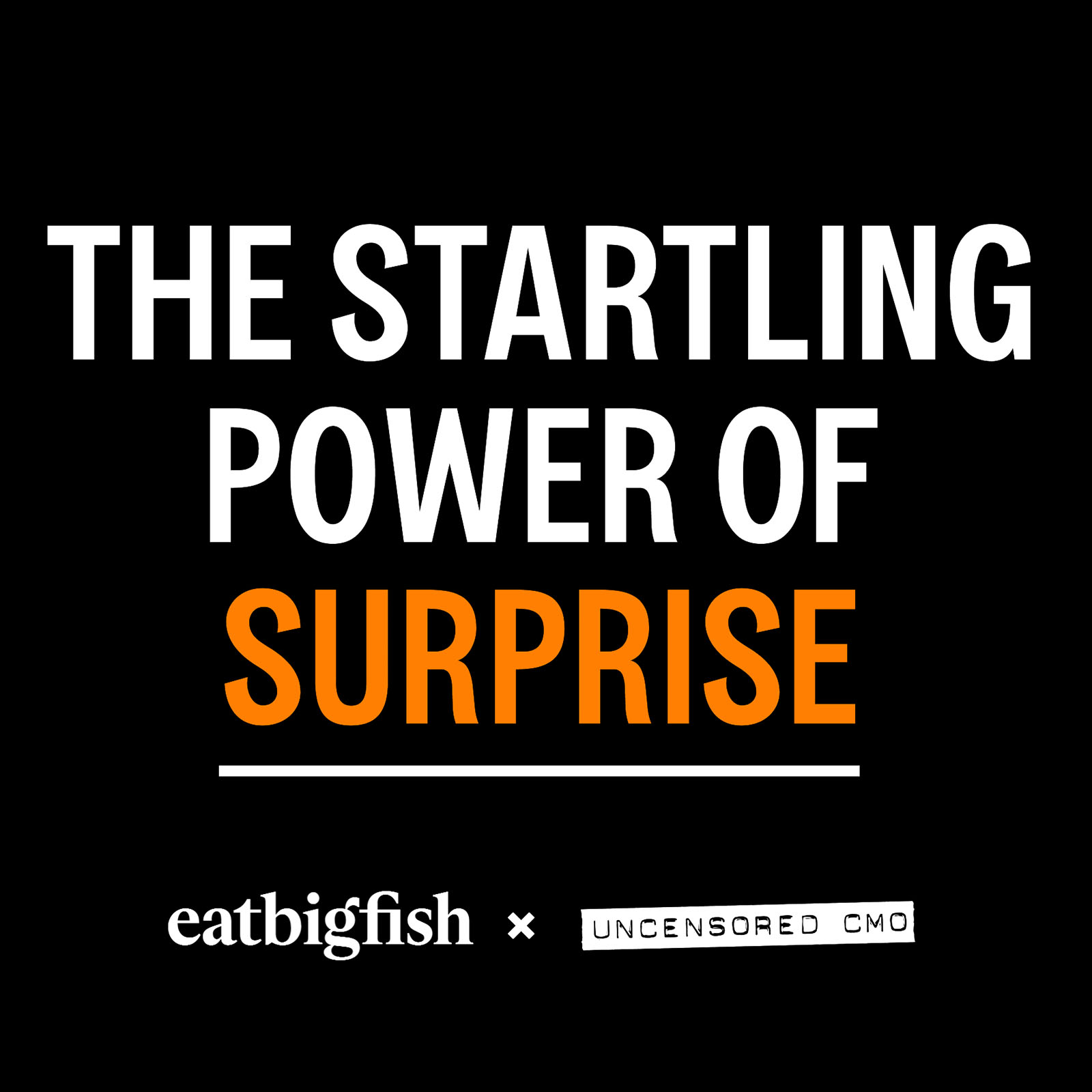
This conversation also formed part of the research for eatbigfish's Cannes Lions 2026 session, "The Startling Power of Surprise" with The Uncensored CMO Jon Evans— the latest chapter in the multi-year Cost of Dull project. For more on the Cost of Dull and the effective strategic use of Surprise, visit eatbigfish.com.
___
Let's Make This More Interesting is a podcast from eatbigfish: the strategic consultancy that helps ambitious Challengers to grow.
Thanks to our editor Ruth and our producer Rachael.
Two thousand years more interesting (with Professor Arlene Holmes-Henderson)
In this episode we talk to Professor Arlene Holmes-Henderson, Professor of Classics Education and Public Policy at Durham University, about her fierce belief in the enduring relevance of classical rhetoric to today’s world, and why its value in helping disadvantaged children find their voice in a more engaging way is fundamental to how schools need to develop oracy, alongside literacy and numeracy. And at the end, she gives a 10-minute masterclass in classical rhetoric that we can all use to make a speech more interesting.
_____________
Arlene's books Forward with Classics and Expanding Classics
The ‘Shy bairns get nowt’ project https://www.durham.ac.uk/news-events/latest-news/2023/05/shy-bairns-get-nowt/
Arlene's work in The Guardian https://www.theguardian.com/education/2023/jun/04/brucey-and-caesar-can-help-children-improve-oracy-says-classic-professor
Connect with Adam on LinkedIn: https://www.linkedin.com/in/adam-morgan-3a473a/
Follow eatbigfish on Linkedin and Instagram
With thanks to our editor Ruth and producer Ross.
Does our attention define us? (with Faris Yakob)
Faris Yakob believes that attention is not merely the first step to engagement with something, but a fundamental shaper of who we are: if ‘we are what we eat’, then what we pay attention to comes to define us.
The author of ‘Paid Attention’ and co-founder of Genius Steals, he and his wife Rosie have spent the last ten years as modern nomads, consulting, speaking and writing. In this episode Adam and Faris discuss:
- How Faris’ diverse career and nomadic life has been ‘a quest for interesting’
- Why attention is part of the substance of our existence
- Why it is impossible to buy attention today …
- …And yet everyone is still competing for our attention all the time
- Strategies for earning attention in a saturated media age
- Why the ‘most interestingness’ comes in the connection of domains that are not obviously connected
Follow Faris on Linkedin: https://www.linkedin.com/in/farisyakob/
Subscribe to Faris and Rosie's substack 'Strands of Genius': https://geniussteals.substack.com/
Connect with Adam on Linkedin: https://www.linkedin.com/in/adam-morgan-3a473a/
Let's Make This More Interesting is a podcast from eatbigfish. Thanks to our editor Ruth, our producer Travis, and to Tiny Podcasts.
The magic of Aardman (with Magda Osinska)
In this episode of Let’s Make This More Interesting from eatbigfish, Adam Morgan explores what it takes to be more interesting in a very different medium: stop frame animation. Madga Osinska, today’s guest, is a director of short films and commercials for the world-famous Aardman Animations, besides her own projects, and a winner of jury prizes throughout Europe for her work.
Adam and Magda unpack what it takes to really deliver Aardman’s four principles – comedy, story, character and craft – alongside the value of constraints in forcing you to find better ways to tell your story. And what it really means to explore the human condition in plasticine.
The conversation explores:
- The combination of heartwarming and heartbreaking in creating audience engagement
- How to give a character depth – and why flaws matter
- The real value of details and easter eggs
- Visual storytelling – using colour and shape to tell the story in parallel to the words
…And why you should be very, very careful never to win an Oscar
–
Let's Make This More Interesting is a podcast from eatbigfish: the strategic consultancy that helps ambitious Challengers to grow.
Thanks to our editor Ruth and our producer Rachael.
Hosted on Acast. See acast.com/privacy for more information.
How to win a peacock show (with Gemma Parkinson)
This is a podcast for people who can’t afford to bore their audience. And in this episode we talk to Gemma Parkinson, a Global Marketing and Business Director at Moet Hennessy, about how to elevate a presentation into an irresistible performance when you really need to carry an audience with you. A fresh, energetic and charismatic thinker, Gemma shares her advice about how to elevate the interest when it really matters.
____
Connect with Adam on LinkedIn: https://www.linkedin.com/in/adam-morgan-3a473a/
Follow eatbigfish on Linkedin and Instagram
With thanks to our editor Ruth and producer Ross.
A healthy dose of horror (with Mathias Clasen)
That’s enough about humour and the lighter side of interesting.
It’s time to step into the dark.
This week Adam meets researcher Mathias Clasen, co-founder of the ‘Recreational Fear Lab’ and author of Why Horror Seduces and A Very Nervous Person's Guide to Horror Movies, to talk about what he’s learned from haunted houses and horror movies, and how to find the ‘sweet spot’ of scary.
Adam and Mathias discuss:
- The definition of ‘recreational fear’, and why it’s not just for horror film fans
- The evidence that shows why fear is good for us. Why children need more ‘risky play’ for their development than we are giving them, and the surprising results of Mathias’ research into fear on our immune systems
- The physiological and cognitive relationship between fear and enjoyment
- Why we should all make friends with Mr Piggy
_
Read Mathias's books:
A Very Nervous Person's Guide to Horror Movies
Watch Mathias's TedX talk: Lessons from a terrified horror researcher
Connect with Adam on Linkedin: https://www.linkedin.com/in/adam-morgan-3a473a/
Let's Make This More Interesting is a podcast from eatbigfish. Thanks to our editor Ruth, our producer Travis, and to Tiny Podcasts.
Creating Epic Stories of High Fantasy (with Dungeon Master Jeffrey Robb)
What does it take to be interesting enough for people to brave the New York City subway to come and join you on a cold, wet, Tuesday night? Every Tuesday night? For two years?
In this episode, Adam Morgan is joined by Jeffrey Robb, professional Dungeon Master, actor, and educator, who runs paid games of Dungeons and Dragons up to eleven times a week across the five boroughs of New York. And what starts as a masterclass in epic, layered storytelling turns into something rather different. Because as Jeffrey explains, a great dungeon master isn't in fact there to tell an epic story; they're there to make it possible for a disparate group of people – with different motivations, different expectations, different levels of commitment – to create an epic story for themselves.
There's a lot here for anyone trying to hold a room. Jeffrey and Adam explore:
- The importance of choices in storytelling experiences: why giving people agency over the narrative creates ownership (- and why the best choices always leave room for a secret third option)
- Why it’s key to see the experience as ‘carefully managed chaos’: how the most inventive moments come from building a system flexible enough to be surprised by its own players
- Where you do and don’t want surprise , and why it has to work in two very different ways here
- The lessons Jeffrey learned from superhero comics and Shakespearean drama that he brings to the experiences he curates
- The primacy of trust, and what a "Session Zero" can teach anyone who needs to unlock a group's imagination fast
- What it means for good drama asks a question of its audience
Along the way, there's a squeaky goblin, why it’s unexpectedly dull to play a villain, and what increasing consumer expectations mean in D&D: why so many people now seem to want a burned village to avenge…
–
Let's Make This More Interesting is a podcast from eatbigfish: the strategic consultancy that helps ambitious Challengers to grow.
Thanks to our editor Ruth and our producer Rachael.
Hosted on Acast. See acast.com/privacy for more information.
On Saturn it’s raining diamonds (with Addison Brown)
How can we be interesting enough to stick in our audiences’ long-term memory? In this episode, Adam speaks to Addison Brown, the science teacher who was the star of a recent Department for Education recruitment film. They discuss the four key principles that underpin success in every lesson – from cognitive load to dual coding – and how shorter pupil attention spans and higher expectations have driven a ‘blossoming of imagination within teaching'.
'Every Lesson Shapes a Life': https://www.youtube.com/watch?v=aGd_Rrs-qNY
Brian Cox asks 'what more do you want?" https://www.youtube.com/watch?v=7uqa2TMzag4
_________
Connect with Adam on LinkedIn: https://www.linkedin.com/in/adam-morgan-3a473a/
Follow eatbigfish on Linkedin and Instagram
With thanks to our editor Ruth and producer Ross.
Stand up and make me laugh (with Chris Head)
Last week’s episode made the business case for humour - but how do we start to find our funny? This week Adam Morgan meets standup comedy writing and speaking coach Chris Head for a comedy masterclass.
Chris shares practical experience and techniques he uses when working with comedians, how he helped stand-up Stepfania Licari push her personal stories for the biggest payoff and coached Richard Lindesay to become a headliner (and TikTok star), all while punching up Adam’s jokes along the way,
They discuss:
- The power of comedy to help engage people with serious and challenging subjects
- Simple techniques to build humour and surprise into anything from a story to an internal announcement
- The importance of making an immediate connection with the audience to break the tension
- The craft involved to go from a joke-shaped thought into a bigger, funnier routine
- The power of misdirection (but not the magic kind)
_____
Contact Chris (or sign up to a course): https://www.chrishead.com/
Chris’s books:
Creating Comedy Narratives for Stage and Screen
A Director's Guide to the Art of Stand-up
The Complete Comedy Script Toolkit
_____
Connect with Adam on Linkedin: https://www.linkedin.com/in/adam-morgan-3a473a/
Let's Make This More Interesting is a podcast from eatbigfish. Thanks to our editor Ruth, our producer Travis, and to Tiny Podcasts.
Disrupting beliefs and breaking inertia (with Lucinda Barlow)
How engaging do you have to be, really, to break inertia? To disrupt beliefs? And what does that take in your communication and in your culture?
In this episode of Let’s Make This More Interesting, Adam Morgan is joined by Lucinda Barlow, who leads International Marketing at Uber across more than 60 countries. Drawing on a remarkable body of evidence spanning 19 communications campaigns around the world, Lucinda shares the two approaches that created real impact and drove growth, and the ones that didn’t.
They discuss the cultural forces driving dull work: mechanistic thinking, an obsession with productivity, the quiet presence of fear as the “8th passenger” in the room: how, together, they create a system that rewards mediocrity.
And Lucinda shares how and why she champions a challenger mindset in her team, even in a large company like Uber, and what it means for the way they both push for and protect more interesting ideas from those forces of Dull.
__
Let's Make This More Interesting is a podcast from eatbigfish: the strategic consultancy that helps ambitious Challengers to grow.
Thanks to our editor Ruth and our producer Rachael. Hosted on Acast. See acast.com/privacy for more information.
The secret of Elmo’s success (with Norman Stiles)
In this episode, Adam talks with Norman Stiles, for 20 years the Head Writer on Sesame Street, about the pioneering pairing of entertainers and educators that changed the educational life of a generation. And how success lay in a very simple ambition that has fascinating implications for us all. Sesame Street made something possible that people thought couldn’t be done. What can it teach us about the audiences we want to really engage?
Watch the classic Sesame Street scenes that Norman refers to during the conversation:
- Grover really wants us to learn near and far
- Ernie answers the Count's telephone
- Telly tries to help Elmo get over his fear of clowns
- Big Bird learns about 'just because' and says goodbye to Mr Hooper
----
Connect with Adam on LinkedIn: https://www.linkedin.com/in/adam-morgan-3a473a/
Follow eatbigfish on Linkedin and Instagram
With thanks to our editor Ruth and producer Ross.
The commercial case for humour (with Bridget Angear)
Is our business leaving money on the table by being too serious? In this episode, Adam speaks to Bridget Angear, legendary strategic planner and co-founder of Craig + Bridget, about her recent research “The Business Case for Humour in Advertising”.
Adam and Bridget explore the evidence for the business effects of humour as revealed in the IPA database, and the different values that different types of humour can have for us if we’re looking to be more engaging.
They look at why marketing and communications might be less entertaining now than it used to be, and they consider why agencies and clients seriously need to have a bit more fun.
Because, despite the business case for humour, have we all become just too scared to be funny?
--
Connect with Adam on Linkedin: https://www.linkedin.com/in/adam-morgan-3a473a/
Watch Bridget deliver “The Business Case for Humour in Advertising” here: http://youtube.com/watch?v=r91B08Xebtg
Bridget's books -
- The insiders' guide to advertising: How the business of advertising really works
- Creative problem solving.: A useful little strategy book by craig+bridget
- Revolt: A movement owner's manual
--
Let's Make This More Interesting is a podcast from eatbigfish. Thanks to our editor Ruth, our producer Travis, and to Tiny Podcasts.
The Power of Surprise - Part 2 (with Rory Sutherland)
In this second part of the conversation with Rory Sutherland, Vice Chairman of Ogilvy and behavioural science evangelist, we discuss why Rory feels we are thinking in entirely the wrong way about the payback for marketing, and the different way we need to go about finding those big, engaging ideas that will disproportionately impact the success of our business.
We talk about the false gods of quantification, how to help our team get lucky, Japanese toilets, and – obviously – the right and wrong way to think about a £300,000 rubber duck.
__
Let's Make This More Interesting is a podcast from eatbigfish: the strategic consultancy that helps ambitious Challengers to grow.
Thanks to our editor Ruth and our producer Rachael. Hosted on Acast. See acast.com/privacy for more information.
Who Are You Really? (with Ross Buchanan)
In this episode, Adam talks to national radio presenter Ross Buchanan (Absolute Radio, Radio X) about what it takes to be interesting for four hours with an audience you never actually see. How much is it about being more interesting in what you say and do, and how much is it about what you share of yourself? And why shouldn’t you talk about biscuits?
-
Connect with Adam on LinkedIn: https://www.linkedin.com/in/adam-morgan-3a473a/
Follow eatbigfish on Linkedin and Instagram
With thanks to our editor Ruth and producer Ross.
Break that routine (with Simon Peacock)
This week Adam meets award-winning improviser and director of the iconic Assassin’s Creed video games Simon Peacock to explore how the element of surprise makes his work and life more interesting.
Beginning with Simon’s early success as a professional improviser in Montreal, they discuss the 10 commandments of good improvisation, why routine and repetition ruin a performance, and what happens when you apply improv principles to your own wedding.
In the second half, Simon shares what it takes to give a more interesting audition, his experience as a director in the world of video games, and why audiences crave surprise.
We find out what preparation it takes to direct 2,000 lines of dialogue in one day, why it’s always a good idea to deliver a unique take in an audition (even if it doesn’t land you the job), and the terrible fate of a canvas sack called Bob.
__
Connect with Adam on Linkedin: https://www.linkedin.com/in/adam-morgan-3a473a/
Let's Make This More Interesting is a podcast from eatbigfish. Thanks to our editor Ruth and our producers at Tiny Podcasts.
The Power of Surprise - Part 1 (with Rory Sutherland)
What is the value of surprise to us in becoming more interesting? And how does one of today's most stimulating thinkers stay so consistently surprising himself?
In Part 1 of a two part conversation, Adam sits down with Rory Sutherland - Vice Chairman of Ogilvy, behavioural science evangelist, and endlessly fascinating reframer of what we thought we knew - to talk about why surprise matters.
As he points out, sometimes the right thing to be is completely unsurprising: there will always be, after all "a market for "the drearily predictable."
But if you're trying to change behaviour - to challenge, disrupt, or eat the big fish - then surprise becomes essential.
Because the brain isn't built to notice what it expects. It's built to notice what breaks the pattern.
In this first half of the conversation, Rory explores:
- What is ‘Just the right amount of weird’?
- Why it is that we give disproportionate attention to what find surprising
- How all human perception is context-dependent, and why recontexting is so powerful
- Why the healthiest creative human activity is to try on as many frames as we can
- What it means to bring a Game Theorist’s mindset to everything we do - even the way we take holidays.
And why, in fact, surprise might be the most cost-efficient way to earn attention there is.
__
Let's Make This More Interesting is a podcast from eatbigfish: the strategic consultancy that helps ambitious Challengers to grow.
Thanks to our editor Ruth and our producer Rachael.
Hosted on Acast. See acast.com/privacy for more information.
Why Your Dog is a Better Producer Than You (with Maz Farrelly)
In this episode, Adam speaks to reality TV producer Maz Farrelly. Maz has made some of the biggest shows on 3 continents, including Britain’s Got Talent, Dancing with the Stars, Big Brother and Celebrity Apprentice – interviewing 12,000 hopefuls along the way. She now works with businesses to help them make themselves more interesting.
Maz shares her learnings on what it takes to really engage an audience, the three secrets of great content, and how to be interesting enough to get cast in one of her shows. Along the way, we discuss:
- Why, if you’re ambitious, you have to see everything as a ‘production’
- How your dog produces you to get what it wants
- What ‘white noise’ is, and why it matters
- How to interview well enough to get into the Big Brother house
- Why many of us have become lazy producers, particularly in big companies
- When ‘fine’ isn’t good enough if you want to be the Number 1 Show
- Asking the questions to discover the interesting story in everyone (and how to make a dull person interesting for a TV audience)
- Why you can only last for a week before you ‘leak’
- The power of subverting expectations as a producer
- The recipe for great content on television (and how to play Susan Boyle Bingo)
- The importance of really ‘scratching’ to get to what’s interesting
- Three bits of advice on how to be a great producer and be more interesting
- How to apply this to our business and personal life
Maz is as fascinating as she is funny. We hope you enjoy this wonderfully stimulating conversation with someone who makes everything she does a little more interesting.
__
Find out about Maz's work here: https://www.mazspeaksglobal.com/
Follow Maz on Linkedin: https://www.linkedin.com/in/maz-speaks/
Connect with Adam on LinkedIn: https://www.linkedin.com/in/adam-morgan-3a473a/
Follow eatbigfish on Linkedin and Instagram
With thanks to our editor Ruth and producer Ross.
Why you need a third Spider Drop (with Heather McGill)
In this episode Adam talks to Heather McGill, Head of Spectator Experience at London 2012 and previously Tour Manager for the Spice Girls, about how to create more interesting shared experiences.
Heather shares lessons about how to create more engaging spectator experiences for live tours and ‘global mega events’ such as the Olympics and Paralympics, large industry expos like Dubai 2020, and her current project, the Harry Potter Forbidden Forest, which has sold over a million tickets.
In a wide-ranging conversation that spans her career Heather reveals insights on:
- The real competition when you are designing experiences
- How to structure the development of an experience
- The importance of the lull, as well as the high
- What exponentially changing audience expectations really means for being more interesting in experience today
- Sir Jonny Ive’s one piece of advice on designing the London 2012 experience
- The three ways to tackle a problem in the experience
- The value of creating common ownership
- How constraints make the experience better
- How to build wonder
…Oh, and why the third spider drop makes all the difference.
___
Find out more about Heather’s work: https://www.unifyexp.com/
The Harry Potter Forbidden Forest Exerience: https://hpforbiddenforestexperience.com/
Connect with Adam on Linkedin: https://www.linkedin.com/in/adam-morgan-3a473a/
Follow eatbigfish on Linkedin and Instagram
How to start the Google Creative Lab (with Andy Berndt)
What does it take to make iconic work with iconic founders – when nobody out there cares about you or your product? And why might having ADHD be a gift in helping you think about how to overcome that?
In our Season 3 opener, Adam Morgan sits down with Andy Berndt, former agency leader and the founding force behind Google’s Creative Lab. Andy has worked alongside some of the most uncompromising figures in modern business — from Steve Jobs, Phil Knight and Michael Jordan to Larry Page, Sergey Brin and Sundar Pichai — and has been at the heart of some of the most celebrated and impactful creative work coming out of America in the last 30 years. As account director, copywriter and client. A unique perspective.
Andy reflects on:
- Why “nobody out there cares” can – and perhaps should – be the beginning of any great creative work.
- The particular talent that Steve Jobs and Phil Knight brought to assessing the work they were presented with
- How humour in the room is often the doorway to the breakthrough idea
- Whether clients get the creative work they deserve
- And how Google’s Creative Lab grew from small stickers to Super Bowl spots
Along the way, he explains how his ADHD became a creative advantage, why briefs are sometimes best answered with a poster instead of a presentation, and how “kids with crayons” built some of the most celebrated work of the digital era, including the now-famous “Parisian Love” film.
__
Let's Make This More Interesting is a podcast from eatbigfish: the strategic consultancy that helps ambitious Challengers to grow.
Follow Adam Morgan on Linkedin.
Thanks to our editor Ruth and our producer Rachael. Hosted on Acast. See acast.com/privacy for more information.
The Cost of Dull in Business (with Peter Field)
In this opening episode, Adam discusses a new analysis that reveals the real financial cost to a business of being dull with Marketing Effectiveness expert Peter Field. Exactly how much more expensive is it to run dull communications than engaging ones? And what can we learn from people who can’t afford to bore their audiences?
Adam and Peter's conversation explores:
- Why we should be much more intolerant of dull external and internal communication than we are
- A simple test: ‘The six slide rule’
- How we can make dull itself more interesting to those we need to change - by putting a concrete cost on it
- Peter’s new analysis, and what it reveals
- So why is it that so many well-intentioned, smart people are choosing to be dull?
- A look ahead to the future guests on the podcast: people whose job it is to make dull subjects interesting, and the two kinds of things we’ll learn from them
- 3 things you can do tomorrow
__
Download Peter's slides on The Cost of Dull here: https://thechallengerproject.com/blog/the-cost-of-dull-with-peter-field
Follow Peter's work here: https://www.linkedin.com/in/peter-field-20110120/
Connect with Adam on LinkedIn: https://www.linkedin.com/in/adam-morgan-3a473a/
Follow eatbigfish on Linkedin and Instagram
With thanks to our editor Ruth and producer Ross.
When Kerosene met Dull (with Peter Field)
A year into the project, what have we learnt about the real price of being dull? Adam opens Season 2 with one of the core collaborators on The Extraordinary Cost of Dull, marketing effectiveness expert Peter Field.
Peter and Adam share how the Extraordinary Cost of Dull has grown from an idea that kickstarted our last season to a 3-year research project with multiple contributors. One that has been sparking a vital conversation within the marketing and communications community over the last year.
Starting with their reflections on the response to the project so far, they discuss new developments including:
Data from the DMA that reveals what dull is costing us not just in TV, but through the whole funnel
Upcoming work from Dr Karen Nelson-Field, another core collaborator, on the real cost of choosing lower attention media platforms and channels
Peter’s latest findings on the business effects of dull, and its impact on brand trust
The development of the practical strategic tools to help marketers avoid dull from the start
They finish with a look at their ambitions for The Extraordinary Cost of Dull in the year head.
____
The Extraordinary Cost of Dull Project is open to contributors. Do you have a data set to share with the project? Get in touch at hello@eatbigfish.com
Follow Peter's work here: https://www.linkedin.com/in/peter-field-20110120/
Connect with Adam on Linkedin: https://www.linkedin.com/in/adam-morgan-3a473a/
Follow eatbigfish on Linkedin and Instagram
Trailer: Let's Make This More Interesting
Do you have moments in your business or personal life when you simply can’t afford to bore your audience? What can we do to hold their undivided attention when it really matters? To find out, Adam Morgan, founder of eatbigfish, speaks to fascinating people who excel at engaging their audience – be they distracted social scrollers, bored schoolchildren or cynical CEOs – and learns from them how we can all be much more interesting.
No one’s ever won the race by keeping pace
Explore more on this topic
Challenge my thinking